
Demystifying A/B Testing: 5 Powerful Ways to Improve Your Conversion Rates
A/B testing, or split testing, involves creating two versions of a webpage, email campaign, or digital asset. One version serves as the "control" (original), while the other is the "variant" (test) featuring a specific variation designed to test a hypothesis.
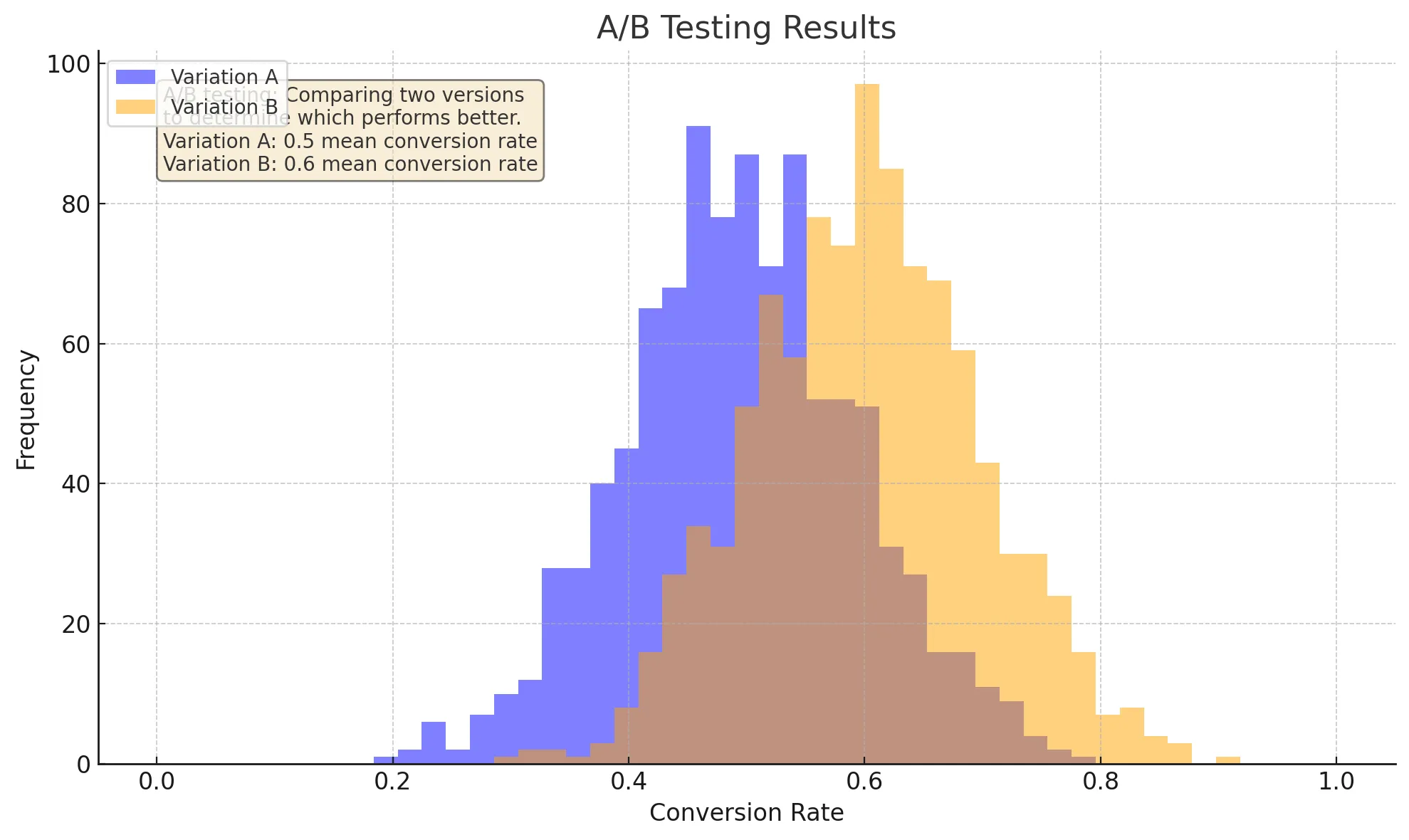
What is A/B Testing?
A/B testing, or split testing, involves creating two versions of a webpage, email campaign, or digital asset. One version serves as the "control" (original), while the other is the "variant" (test) featuring a specific variation designed to test a hypothesis.
The goal is to identify which version performs better regarding user engagement, conversion rates, or overall performance, enabling data-driven optimization decisions.
Why A/B Testing Matters
A/B testing is crucial for improving conversion rates because it allows you to:
- Validate assumptions - Test whether specific design elements or copy changes will improve conversions
- Identify optimal variations - Determine which version performs best, eliminating guesswork
- Reduce uncertainty - Minimize risk of changes that negatively impact conversion rates
How to Conduct A/B Testing
5 Steps
1. Defining Your Hypothesis
Before starting, establish a clear hypothesis. What specific change do you want to test? For example: "Will a red button perform better than blue?" or "Will a longer form increase conversions?"
- Identify the variable you want to test (button color, form length)
- Determine your test goal (increase conversions, improve engagement)
- Define metrics for measuring success (conversion rate, click-through rate)
2. Creating Your Control and Variant
- The control version should be your original, untested digital asset
- The variant version should feature the specific change being tested
- Ensure both versions are identical except for the variable being tested
3. Splitting Traffic
To ensure accurate results, split traffic evenly between versions:
- Use randomization tools (Google Optimize, Unbounce) to split traffic
- Ensure both groups have equal participants to account for biases
4. Collect Data and Analyze Results
- Use analytics tools (Google Analytics, Mixpanel) to track key metrics
- Compare performance of both versions using statistical methods
- Identify statistically significant differences between versions
5. Implement Changes after Drawing a Conclusion
- Determine which version performed better based on data
- Document findings and create a summary report
- Use insights to inform future optimization efforts
A/B Testing Examples
Headline Test
- Original: "Get Started with Our Service Today!"
- Variant: "Unlock the Power of [Service Name] and Start Seeing Results!"
- Goal: Increase conversions by 10%
Test which headline resonates better with your target audience to encourage action.
Button Color Test
- Original button: Blue
- Variant button: Red
- Goal: Increase click-through rate by 5%
Test different button colors to see which stands out more and grabs attention.
Image Test
- Original: Generic stock photo
- Variant: Real customer testimonial with testimonial quote
- Goal: Increase engagement by 15%
Test images that resonate better with audiences and build trust through real-world examples.
Form Length Test
- Original: 5 questions
- Variant: 3 questions
- Goal: Increase conversions by 12%
Test different form lengths to identify the sweet spot between gathering adequate information and minimizing friction.
Email Subject Line Test
- Original: "Your Account Information"
- Variant: "Important Update to Your Account – Check Now!"
- Goal: Increase open rates by 10%
Test subject lines that grab attention and encourage people to open emails.
Best Practices for A/B Testing
- Start small and gradually increase complexity
- Keep testing fair—ensure control and variant versions are identical except for the tested variable
- Test multiple variations simultaneously to accelerate learning
- Monitor and analyze results using data visualization tools
Common A/B Testing Mistakes
- Insufficient sample size - Too few participants can lead to inaccurate results
- Inadequate control group - Failing to maintain an identical control version skews results
- Over-testing - Running too many simultaneous tests dilutes findings and wastes resources
Conclusion
A/B testing is essential for unlocking optimization potential and improving conversion rates. Understanding what it is, how it works, and best practices for conducting successful tests equips you to make data-driven decisions that drive results.
Remember: A/B testing is an ongoing process of experimentation, iteration, and optimization. By embracing this iterative approach, you'll continually refine your strategy and achieve greater success in digital marketing.
Share this article